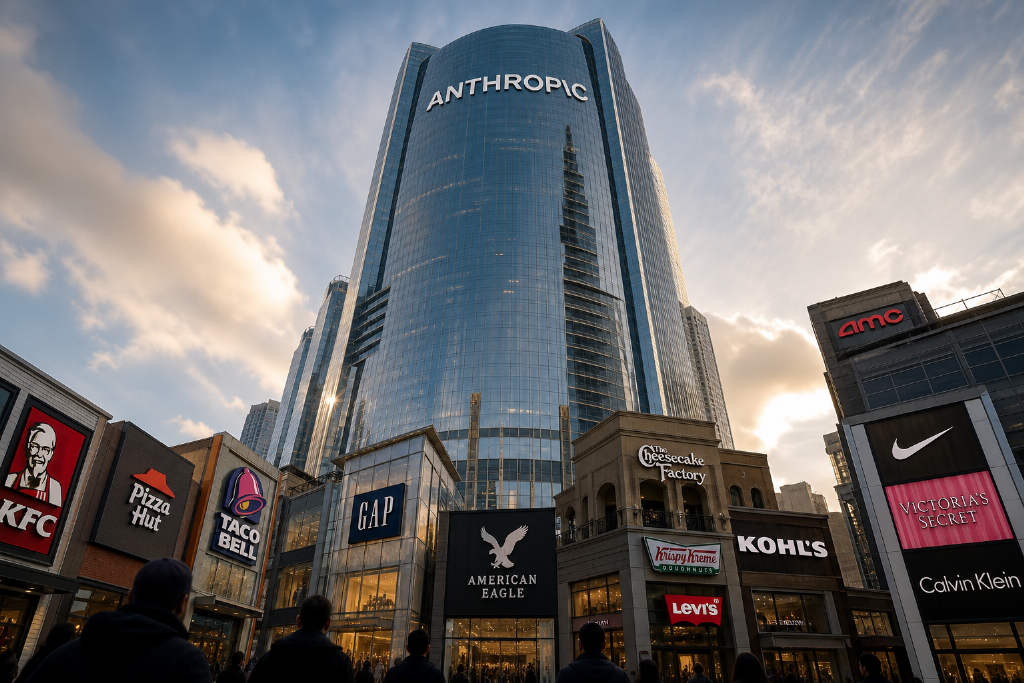
Serenity2026-08-29 06:31:48Serenity questions whether frontier AI lab valuations have become detached from traditional consumer businessesSerenity said on Aug. 29 that current valuations for frontier AI labs may have reached an "absurd" level, using Anthropic as its central example. The post argued that if Anthropic were to go public at a $2 trillion valuation, then 10% of that market value would equal $200 billion. In Serenity’s framing, that amount would theoretically be enough to acquire a long list of established consumer brands. The brands named by Serenity included Taco Bell, Pizza Hut, KFC, GAP, American Eagle, Levi‘s, Victoria』s Secret, Cheesecake Factory, Krispy Kreme, Calvin Klein, Kohl‘s, AMC, Nike, Under Armour, and Canada Goose. Serenity added that roughly $51.6 billion would still remain after those purchases, in theory. The post also noted that some investors do expect Anthropic’s potential IPO valuation to reach or exceed $2 trillion, while others have assigned even higher figures based on expected rapid growth. Serenity’s main point was not a formal valuation model, but the scale of the gap itself: frontier AI labs are being priced far above traditional consumer and brick-and-mortar businesses, and that disparity has become a visible gauge of today’s AI capital frenzy.930
Morgan Stanle2026-08-27 06:13:09Morgan Stanley Sees Google Trading at a Premium While Meta Stays Deeply DiscountedMorgan Stanley’s Aug. 25 internet valuation update points to a sharp split in how the market is pricing major U.S. internet platforms. Over the past week, the bank’s covered internet names fell 2% on average, in line with the S&P 500 and Nasdaq, but individual performance diverged: Meta dropped about 7%, Amazon fell about 2%, and Google was roughly flat. In the report, Morgan Stanley kept its internet sector rating at “attractive” and laid out why valuations have pulled apart across the group. Google is the outlier. On a forward EV/EBITDA basis, it trades at 15.1x, an 8% premium to its two-year average and a 12% premium to its three-year average. Morgan Stanley tied that premium to a reassessment of Google’s AI position, including higher assumptions for external TPU sales, Gemini model progress, and expanding cloud margins. Meta, by contrast, trades at 8.7x forward EV/EBITDA, a 30% discount to its two-year average and a 28% discount to its three-year average, even as its AI ad tools show monetization progress. Amazon sits between the two at 11.2x, below both its two-year and three-year averages. The bank said any broader valuation recovery will need earnings estimate upgrades rather than a simple move back to historical averages.520
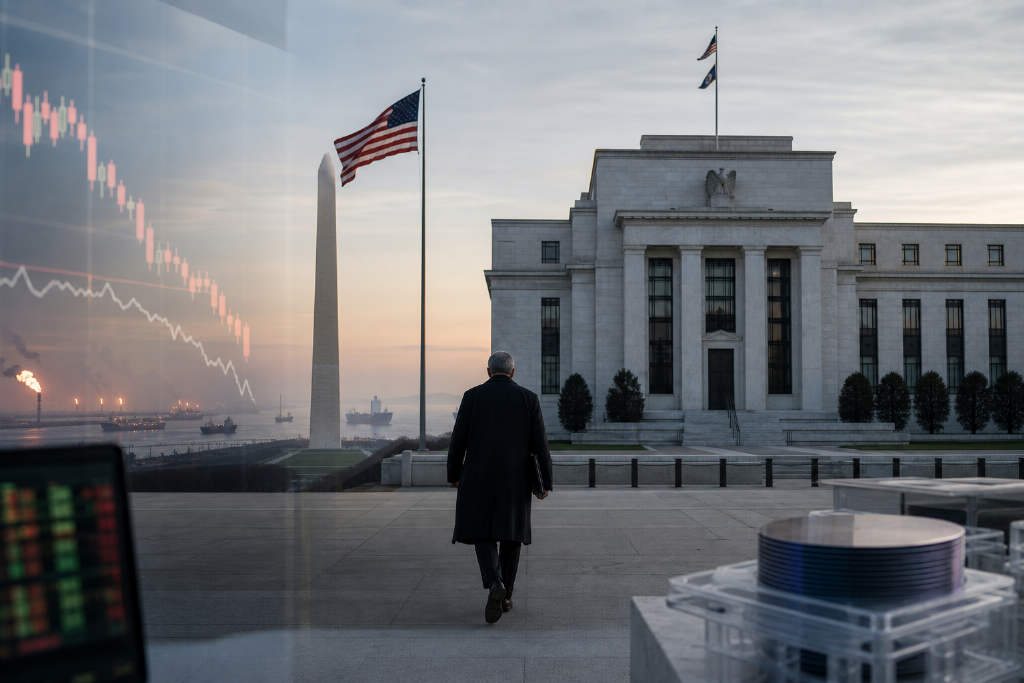
Policy Regula2026-08-19 09:03:32Markets Reprice as Hormuz Risk and a No-Guidance Fed CollideABMedia said the latest market selloff reflects more than a routine valuation reset. The report argues that investors are dealing with two pressures at once: inflation risk tied to the effective closure of the Strait of Hormuz and a change in how the Federal Reserve communicates under new Chair Warsh. Semiconductor shares led the decline, with the Philadelphia Semiconductor Index down 4.98% overnight and TSMC ADR falling 4.07%, while Taiwan’s stock benchmark ended at 44,719.35, down 1.30% after touching 44,308.71 intraday. The article said the problem is not simply that rates are high, oil is rising, or growth is cooling. Its central point is that markets are still trading as if the Fed will step in early and clearly signal its next move, even though Warsh has explicitly rejected forward guidance and has floated ending quarterly economic projections and the dot plot. At the same time, 10-year Treasury yields have returned to 4.71%, the Fed kept rates at 3.50% to 3.75% on July 29, and three officials favored a 25-basis-point hike. ABMedia described the move as a correction rather than a crash and said investors should watch Treasury yields, progress in Hormuz negotiations, and whether markets can identify the Fed’s new reaction function.1490
MiniMax2026-08-07 05:03:26MiniMax shares jump 78.21% after H3 launch and open-source release as investors reprice video AIMiniMax has become one of the market’s sharpest AI rerating stories in the span of a week. After releasing its multimodal generation model H3 on July 31 and open-sourcing it on Aug. 3, the company’s shares climbed 78.21% from the post-launch period through 10:53 a.m. on Aug. 7, including a 23.15% gain on the day. The source article argues that investors are no longer treating H3 as just another benchmark-driven model release. Instead, they are pricing in a broader thesis around video generation as a high-token-consumption workload, lower inference costs, and the ecosystem effects that follow an open-source strategy. According to MiniMax, H3 supports text, image, video and audio context, and can generate up to 15-second videos at 2K resolution, 24FPS, with native stereo audio. In Artificial Analysis blind testing, H3 scored 1242 Elo in text-to-video with audio, ranking second globally, while placing first in video editing and among the top three in image-to-video. The article also highlights price as a key factor, saying H3’s per-second 2K cost is less than one-third of flagship models and its 768P pricing is less than half of mainstream offerings. The strongest shift in sentiment came after open-sourcing. MiniMax said 16 chip vendors, multiple developer communities, cloud inference platforms and inference frameworks had already adapted or integrated H3, with more than 100 enterprises going live on Day 0. That has pushed the discussion beyond model rankings toward revenue growth, ecosystem distribution and strategic positioning.2570
Just Keep Buy2026-07-22 20:00:14'Just Keep Buying' Author Gets Bearish: Nick Maggiulli Trims 20% as AI Valuations SurgeNick Maggiulli, author of 'Just Keep Buying,' turned bearish for the first time, cutting his retirement account from 100% stocks to an 80/20 stock-bond mix due to AI valuation concerns. He later flipped bullish again after seeing Anthropic's explosive growth.440
Ethereum2026-07-15 09:02:44Four research notes shaping this cycle: Ethereum’s shifting thesis, AI valuation stress, Multicoin’s ZEC and HYPE bet, and the next step for on-chain RWATechFlowPost compiled several recent research views that cut across crypto and AI, and together they sketch out how investors are rethinking this cycle. One strand focuses on Ethereum: activity inside the broader ecosystem remains large, but the base layer is capturing a much smaller share of that value than many bulls once expected. Another looks at the AI trade through BlackRock’s lens, comparing the current run-up with the late-1990s internet boom and flagging a tension between stretched long-term valuation metrics and still-strong earnings growth. The roundup also highlights Multicoin Capital managing partner Tushar Jain’s positioning in Solana, Hyperliquid and Zcash. His framework separates spot market leadership from derivatives leadership, while treating ZEC as a conviction bet driven by community, use case and social consensus rather than cash flow. A separate analysis examines privacy AI, asking where plaintext is exposed as prompts move between user devices, networks, model servers and external tools. It reviews protocol-based privacy, OHTTP, trusted execution environments, end-to-end encryption, FHE, MPC and local inference, then argues that agent workflows remain the harder frontier. The final theme is tokenized real-world assets, with gold used as a case study. The argument is that simply moving assets on-chain is no longer enough; the next stage is to make them productive. In that view, structured on-chain covered-call strategies tied to tokenized gold may point to a broader shift from passive tokenization toward yield-generating RWA design.1610
Anthropic2026-07-09 00:20:15On-Chain Traders Push Anthropic’s Implied Valuation to $1 Trillion as Legal Risks LoomSynthetic pre-IPO tokens on Solana have lifted Anthropic’s implied valuation to $1 trillion, but the instruments offer only price exposure and come with explicit legal warnings from Anthropic.1820
Ginoa2026-07-08 09:17:30Ginoa Highlights AI NFT Appraisal Model as Circulating Supply Reaches 2.55 MillionGinoa is positioned as an AI-based NFT appraisal platform focused on fair pricing, liquidity discovery, and scam reduction. Public data shows an all-time high of 2.87, with 2,549,999 tokens in circulation against a maximum supply of 4,999,999.370